To bridge the critical divide between national vision and regional reality, the National Academy of Science and Technology, Philippines (NAST PHL) has spearheaded SANDIWA: Building Regional Capacities in Futures Thinking for Indicators Development. By engaging the University of the Philippines National College of Public Administration and Governance – Governance Futures Laboratory (UP NCPAG-GFL) to facilitate these workshops, NAST PHL directly confronts a long-standing challenge in the Philippine Science, Technology, and Innovation (ST&I) ecosystem: the absence of an integrated, evidence-based indicator framework capable of capturing the dynamic nature of innovation across the nation’s diverse regions.
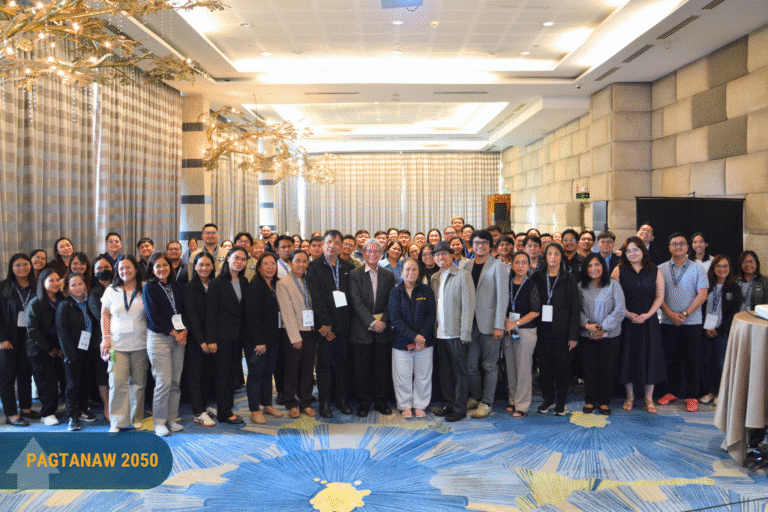
To bridge the critical divide between national vision and regional reality, the National Academy of Science and Technology, Philippines (NAST PHL) has spearheaded SANDIWA: Building Regional Capacities in Futures Thinking for Indicators Development. By engaging the University of the Philippines National College of Public Administration and Governance – Governance Futures Laboratory (UP NCPAG-GFL) to facilitate these workshops, NAST PHL directly confronts a long-standing challenge in the Philippine Science, Technology, and Innovation (ST&I) ecosystem: the absence of an integrated, evidence-based indicator framework capable of capturing the dynamic nature of innovation across the nation’s diverse regions.
While national efforts have advanced foresight-based planning, regional and provincial levels must now strengthen their ability to translate this national long-term vision into measurable, actionable outcomes. SANDIWA specifically commits to cultivating a culture of foresight among DOST provincial offices, enabling them to develop robust, scenario-based indicators aligned with the PAGTANAW 2050 vision.
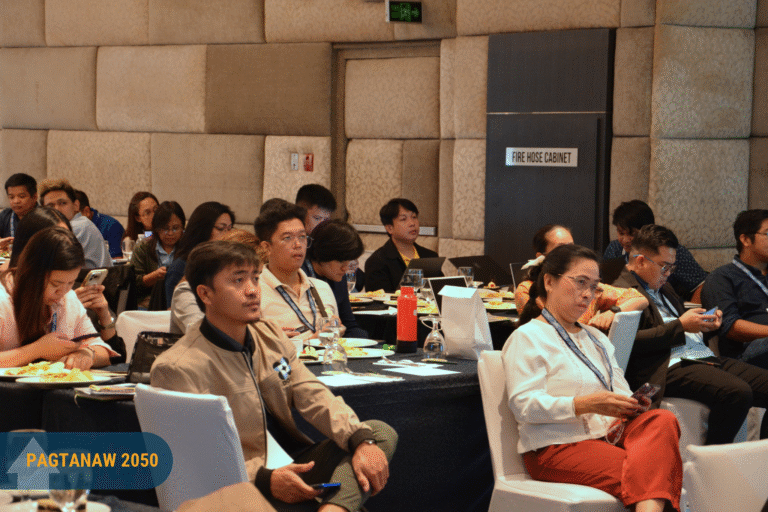
During the intensive, two-day activity, participants map institutional priorities, localize national goals, and co-create indicator systems grounded in local realities. The training utilizes key futures-thinking tools, including scenario building, backcasting, and the futures triangle. These comprehensive exercises empower provincial offices to anticipate future challenges, align institutional strategies with the PAGTANAW 2050 Key Operational Areas, and develop adaptive, forward-looking programs that support sustainable regional growth.
Through this initiative, DOST, through the NAST PHL, aspires to institutionalize foresight-informed governance by bridging the critical gap between national planning and local implementation. Capacitating these offices to apply sophisticated ST&I indicators enhances data-driven decision-making and fosters regional ownership of the country’s long-term vision. The immediate outcomes of SANDIWA, following the integration of all collected indicators, will inform the development of a definitive national ST&I indicator framework to guide policy development and evaluation across all levels of government.
This effort articulates the powerful, shared commitment of DOST and NAST PHL to build a future-ready, innovation-driven Philippines. In this nation, foresight is institutionalized as a core competency in governance and the essential mechanism for national development (Jeremy D. Desales).
PAGTANAW 2050 is the first DOST-funded inter-disciplinal and trans-disciplinal project on Philippine-focused ST&I Foresight and Strategic Plan that would impact the aspirations of the Filipino people on or before 2050: A Prosperous, Archipelagic, and Maritime Nation.
For more information about PAGTANAW 2050, you may visit the NAST PHL website at https://nast.dost.gov.ph/index.php/pagtanaw-2050 and social media accounts through Facebook, Instagram, X, and LinkedIn: @pagtanaw2050