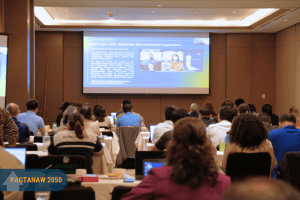
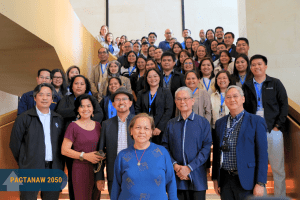
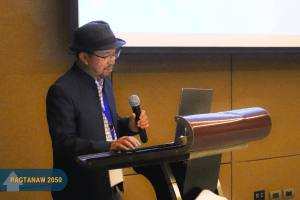
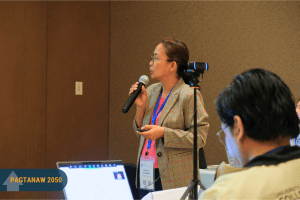
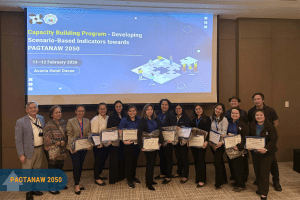
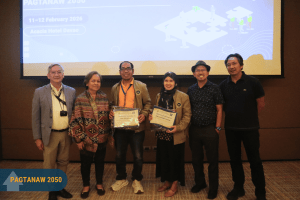
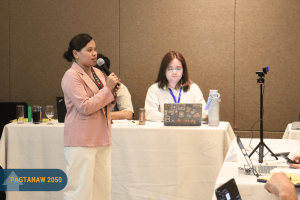
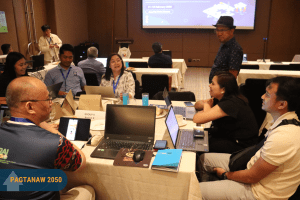
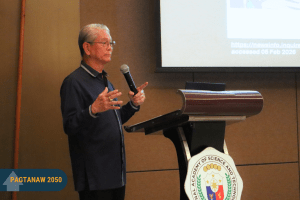
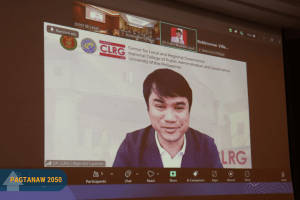
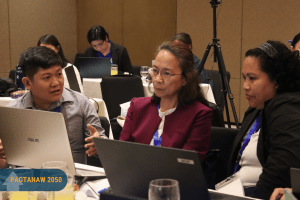
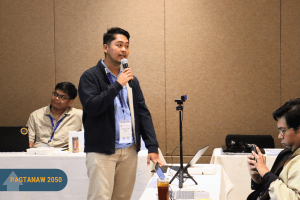
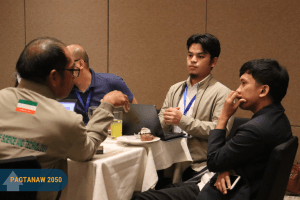
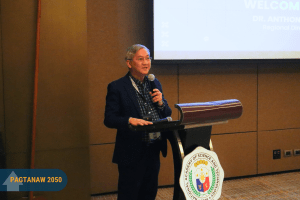
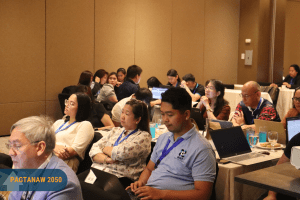
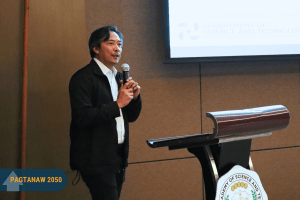
DAVAO CITY – A nation cannot navigate the future if its map does not match the terrain. Recognizing that the path to a resilient Bagong Pilipinas must be charted not only from the capital but from the distinct realities of the regions, the National Academy of Science and Technology, Philippines (NAST PHL), in partnership with DOST Region XI, concluded the final leg of SANDIWA: Building Regional Capacities in Futures Thinking for Indicators Development on 11–12 February 2026, at Acacia Hotel Davao, as part of the Development of the PAGTANAW 2050, the Philippine ST&I Foresight Indicators Project.
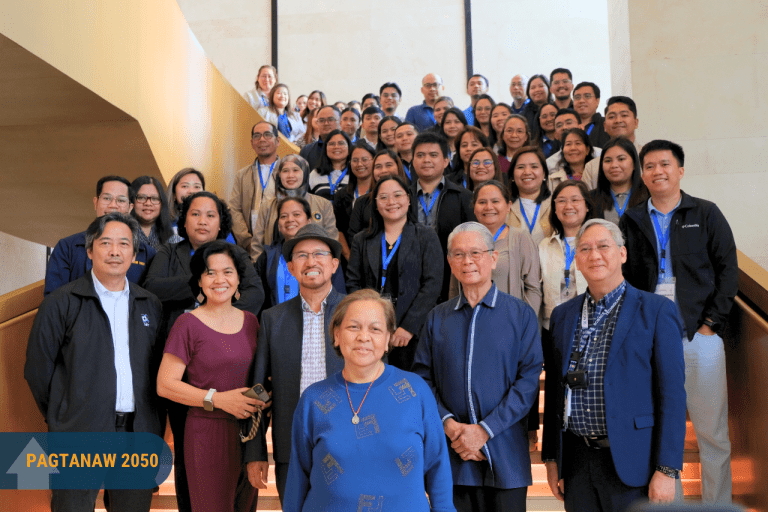
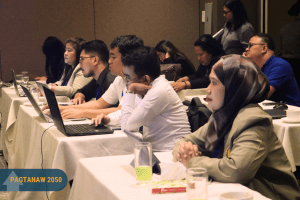
Facilitated by the UP National College of Public Administration and Governance – Governance Futures Lab (GFL), the workshop gathered provincial and regional officers from Zamboanga Peninsula, Northern Mindanao, Davao Region, SOCCSKSARGEN & BARMM, and CARAGA. Their mission was clear and critical: to translate the broad strokes of the national PAGTANAW 2050 framework into granular, actionable, and region-specific indicators using strategic foresight tools such as Scanning, the Futures Triangle, and Backcasting. Through this process, the workshop sought to transform how local governance approaches the future by moving beyond traditional planning approaches that often react to the “pushes of the present,” such as disasters, resource constraints, and political turnover. Instead, participants were guided to identify the “pulls of the future,” defined as their preferred development scenarios, and to backcast the concrete milestones necessary to achieve them.
SANDIWA underscored that a “one-size-fits-all” approach to national development is insufficient for an archipelago defined by diverse geographic and socio-economic realities. Standardized national indicators, while useful for macro-level benchmarking, often fail to capture the nuanced path dependencies and specific industrial structures of local economies. A national metric on food security may track total rice production, yet it misses the specific bottlenecks identified by SOCCSKSARGEN & BARMM, where the challenge lies not in production but in the logistical paradox of regional surplus amid national scarcity. Similarly, a national water security index might measure potable water access, but fail to anticipate localized threats such as mining runoff and saltwater intrusion in CARAGA, or the rapid urbanization pressures confronting Northern Mindanao.
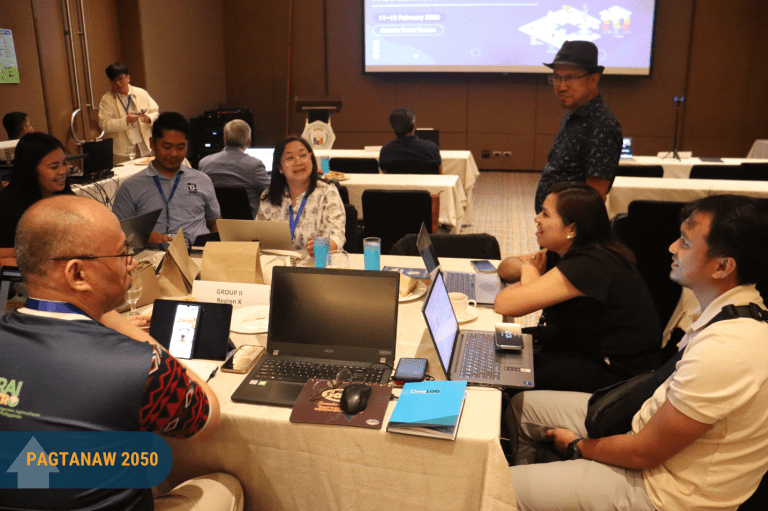
The SANDIWA workshop has proven that the future of the Philippines is not a single destiny, but a collection of regional aspirations woven together by science, technology, and innovation. By localizing indicators, the country moves from generic surveillance to targeted strategic intelligence. Regions are empowered to measure what truly matters to their unique development trajectories, ensuring that the road to 2050 is paved with data that reflects ground-level realities, transforming PAGTANAW 2050 from a static document into a dynamic dashboard, a living tool that guides the nation from the inertia of “business as usual” toward the rhythm of its preferred futures. – Jeremy D. Desales/NAST PHL
PAGTANAW 2050 is the first DOST-funded inter-disciplinal and trans-disciplinal project on Philippine-focused ST&I Foresight and Strategic Plan that would impact the aspirations of the Filipino people on or before 2050: A Prosperous, Archipelagic, and Maritime Nation.
For more information about PAGTANAW 2050, you may visit the NAST PHL website at https://nast.dost.gov.ph/index.php/pagtanaw-2050 and social media accounts through Facebook, Instagram, X, and LinkedIn: @pagtanaw2050